Kentucky Dog Registration Information
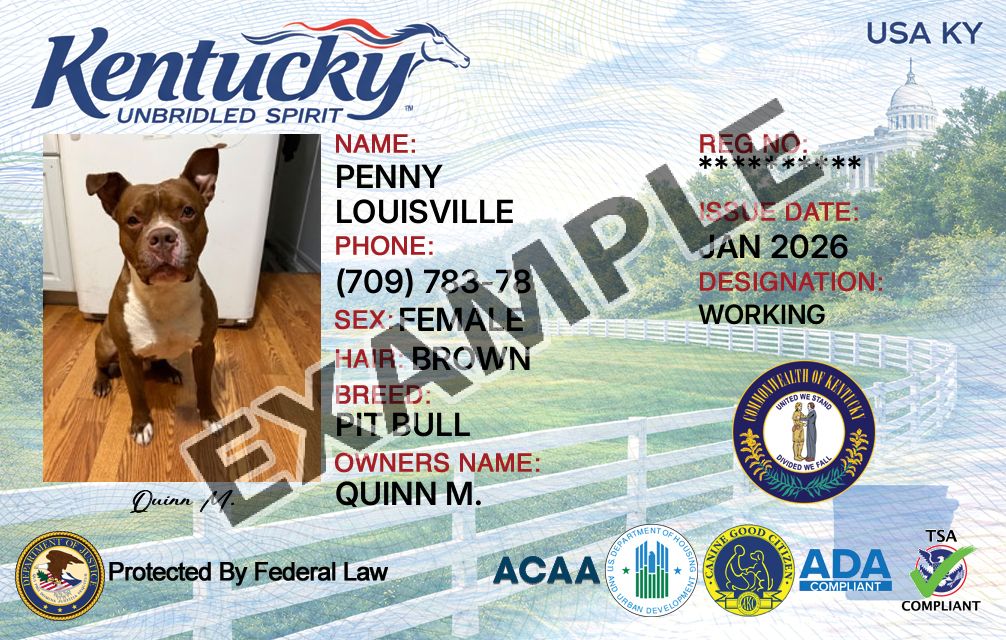
State Licensed, Service Dogs and Emotional Support Dogs in Kentucky
If you’re searching where do I register my dog in Kentucky for my service dog or emotional support dog, the key point is this: Kentucky does not have one single statewide “service dog registration” or “emotional support dog registration.” What most people mean by “registering” is (1) getting a dog license in Kentucky (when required by your city/county) and (2) staying compliant with rabies vaccination rules that are enforced locally through animal control and public health.
Where to Register or License Your Dog in Kentucky
Because animal control dog license Kentucky requirements are set and enforced locally, the right place to start is your city/county animal services, animal control, or licensing office. Below are several official Kentucky examples to help you identify the kind of office you should contact for where to register a dog in Kentucky.
| Office | Address | Phone | Office Hours | |
|---|---|---|---|---|
| Louisville Metro Animal Services (Pet Licensing / In Person) |
3528 Newburg Rd Louisville, KY 40218 |
(502) 473-7387 | Not listed | Monday–Saturday: 12:00 p.m.–6:00 p.m. Sunday: Closed |
| Lexington-Fayette Animal Care & Control (LFACC) |
1600 Old Frankfort Pike Lexington, KY 40504 |
(859) 255-9033 | lfaccinfo@lfacc.org | Animal Services: Monday–Saturday: 12:00 p.m.–6:00 p.m. Sunday: Closed |
| Franklin County Fiscal Court – Animal Control | Not listed (see county page for details) | Dispatch: (502) 875-8582 | richard.paige@franklincounty.ky.gov | Monday–Friday: 8:00 a.m.–4:30 p.m. |
| Franklin County Humane Society (Shelter listed by Franklin County for animal intake) |
100 Companion Place Frankfort, KY 40601 |
(502) 875-7297 | Not listed | Not listed |
Overview of Dog Licensing in Kentucky
Kentucky has statewide rabies rules, but licensing is usually local
In Kentucky, rabies control and vaccination requirements are established in state law and public health rules, while dog licensing programs are often created and run by local government. That’s why the answer to “where do I register my dog in Kentucky” is most often: your city/county animal services or animal control office.
Rabies vaccination is a foundational requirement
Kentucky law requires dogs (and also cats and ferrets) to be vaccinated against rabies by four months of age and revaccinated based on the immunization period certified by your veterinarian. The vaccinating veterinarian issues a rabies vaccination certificate and provides a rabies tag that corresponds to the certificate, and the tag is intended to be worn by the dog. This is a core part of rabies enforcement statewide.
What a “dog license” usually means
A local pet license is typically a city/county-issued record and tag showing the dog is registered with that jurisdiction (often tied to proof of rabies vaccination and a fee). Many Kentucky jurisdictions set:
- Annual renewal periods (common)
- Different fees for spayed/neutered vs. unaltered dogs
- Local rules on wearing the license tag on the collar
- Enforcement through animal control or local ordinance officers
How Dog Licensing Works Locally in Kentucky
Step 1: Find your local licensing authority
Start with your local government’s animal services/animal control department. If your area doesn’t have a dedicated licensing program, your county may still enforce rabies rules and other animal ordinances through animal control. Some places use the shelter as the point of sale for tags; others use a government office.
Step 2: Get rabies vaccination documentation
Most local programs require proof of a current rabies vaccination (certificate from a veterinarian). Keep a digital copy and a paper copy. This is also helpful if you travel or if your dog is ever found by animal control.
Step 3: Apply for the license (in person, by mail, or online where offered)
Depending on your city/county, you may be able to apply in person at animal services, submit by mail, or use an online portal. Even when online licensing exists, the local agency typically still controls the licensing rules and enforcement.
Step 4: Keep the tag accessible and renew as required
Many local ordinances require the dog to wear its license tag and rabies tag on its collar (or otherwise have proof available when requested). Renewal timelines vary by jurisdiction, so verify your county/city schedule.
Who enforces licensing and rabies rules?
Enforcement is typically handled by local animal control, sometimes in coordination with local health departments for rabies exposure/quarantine procedures. Kentucky’s public health rabies program also supports statewide rabies prevention and guidance.
Service Dog Laws in Kentucky
A service dog is defined by training and tasks, not by “registration”
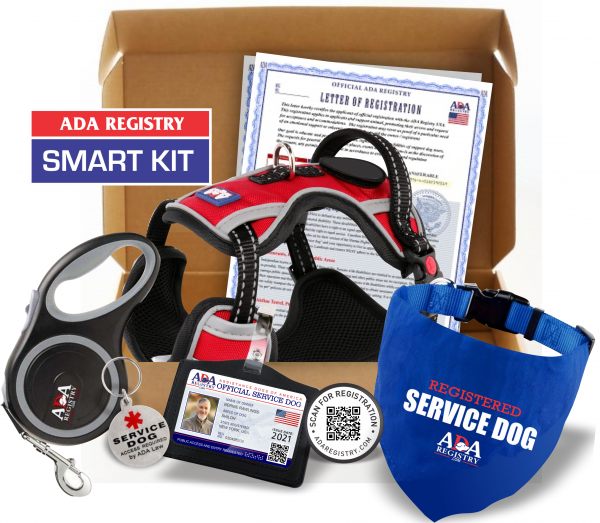
Under federal ADA guidance, a service animal is a dog trained to do work or perform tasks directly related to a person’s disability. A service dog generally can go most places the public can go, even when there is a “no pets” policy, as long as the dog is under control and housebroken. Importantly, the ADA does not require a service dog to be certified, registered, or wear a vest.
What staff may ask (and what they cannot ask)
If it isn’t obvious what the dog does, a business or state/local government facility may ask only two questions:
- Is the dog a service animal required because of a disability?
- What work or task has the dog been trained to perform?
They cannot require documentation that the dog is registered/licensed/certified as a service animal, demand medical paperwork, or ask about the nature of the person’s disability.
How service dogs relate to a local dog license in Kentucky
A local government may require service dogs to follow the same baseline rules that apply to all dogs in that jurisdiction—such as vaccination and a local license—so long as the rules are applied generally. Some Kentucky localities also provide fee exemptions for assistance/service dogs, but this is not universal and must be verified locally.
Emotional Support Animal Rules in Kentucky
ESAs are not service animals under the ADA
An emotional support animal (ESA) may help someone feel calmer or less anxious through companionship. However, under ADA guidance, emotional support or comfort is not, by itself, a trained task, and ESAs are therefore not considered service animals for public-access purposes. That means an ESA generally does not have the same rights to enter stores, restaurants, or other public places that are restricted to pets.
Do you “register” an ESA in Kentucky?
There is no official Kentucky statewide ESA registry that creates public-access rights. What you still may need, regardless of ESA status, is compliance with:
- Local licensing rules (your city/county dog license in Kentucky requirements)
- Rabies vaccination requirements and proof
- Any applicable housing rules and documentation processes (handled through the housing provider’s reasonable accommodation process, not a public “registry”)
Frequently Asked Questions
- Dog license in Kentucky: A local city/county registration (tag/record) for dogs, usually tied to rabies proof and a fee.
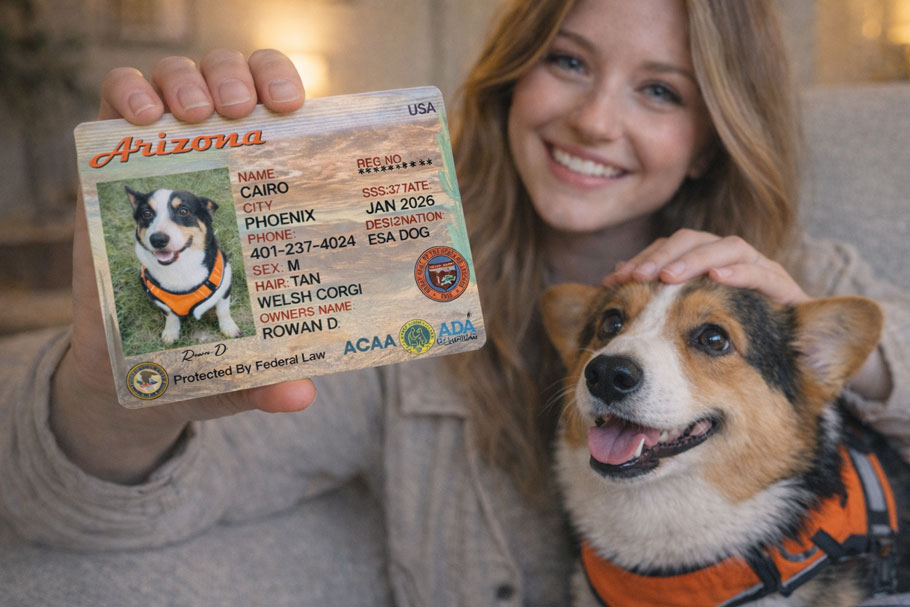
- Service dog: A dog trained to perform tasks directly related to a person’s disability (ADA concept). Not created by purchasing a certificate.
- Emotional support animal: Provides comfort/companionship; not a service animal under the ADA and generally does not have public-access rights.
Disclaimer: Licensing requirements and office locations may change. Residents should verify details with their local animal services office within Kentucky.
Register A Dog In Other Kentucky Counties
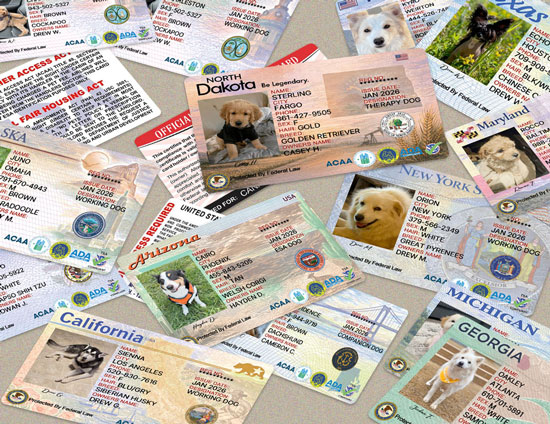
Select your county from the dropdown below to get started with your dog’s ID card. Requirements and license designs may vary by county, so choose your location to see the correct options and complete your pup’s registration.
- Adair County Dog Registration
- Allen County Dog Registration
- Anderson County Dog Registration
- Ballard County Dog Registration
- Barren County Dog Registration
- Bath County Dog Registration
- Bell County Dog Registration
- Boone County Dog Registration
- Bourbon County Dog Registration
- Boyd County Dog Registration
- Boyle County Dog Registration
- Bracken County Dog Registration
- Breathitt County Dog Registration
- Breckinridge County Dog Registration
- Bullitt County Dog Registration
- Butler County Dog Registration
- Caldwell County Dog Registration
- Calloway County Dog Registration
- Campbell County Dog Registration
- Carlisle County Dog Registration
- Carroll County Dog Registration
- Carter County Dog Registration
- Casey County Dog Registration
- Christian County Dog Registration
- City of Lexington County Dog Registration
- City of Louisville County Dog Registration
- Clark County Dog Registration
- Clay County Dog Registration
- Clinton County Dog Registration
- Commonwealth of Kentucky County Dog Registration
- Crittenden County Dog Registration
- Cumberland County Dog Registration
- Daviess County Dog Registration
- Edmonson County Dog Registration
- Elliott County Dog Registration
- Estill County Dog Registration
- Fayette County Dog Registration
- Fleming County Dog Registration
- Floyd County Dog Registration
- Franklin County Dog Registration
- Fulton County Dog Registration
- Gallatin County Dog Registration
- Garrard County Dog Registration
- Grant County Dog Registration
- Graves County Dog Registration
- Grayson County Dog Registration
- Green County Dog Registration
- Greenup County Dog Registration
- Hancock County Dog Registration
- Hardin County Dog Registration
- Harlan County Dog Registration
- Harrison County Dog Registration
- Hart County Dog Registration
- Henderson County Dog Registration
- Henry County Dog Registration
- Hickman County Dog Registration
- Hopkins County Dog Registration
- Jackson County Dog Registration
- Jefferson County Dog Registration
- Jessamine County Dog Registration
- Johnson County Dog Registration
- Kenton County Dog Registration
- Knott County Dog Registration
- Knox County Dog Registration
- LaRue County Dog Registration
- Laurel County Dog Registration
- Lawrence County Dog Registration
- Lee County Dog Registration
- Leslie County Dog Registration
- Letcher County Dog Registration
- Lewis County Dog Registration
- Lincoln County Dog Registration
- Livingston County Dog Registration
- Logan County Dog Registration
- Lyon County Dog Registration
- Madison County Dog Registration
- Magoffin County Dog Registration
- Marion County Dog Registration
- Marshall County Dog Registration
- Martin County Dog Registration
- Mason County Dog Registration
- McCracken County Dog Registration
- McCreary County Dog Registration
- McLean County Dog Registration
- Meade County Dog Registration
- Menifee County Dog Registration
- Mercer County Dog Registration
- Metcalfe County Dog Registration
- Monroe County Dog Registration
- Montgomery County Dog Registration
- Morgan County Dog Registration
- Muhlenburg County Dog Registration
- Nelson County Dog Registration
- Nicholas County Dog Registration
- Ohio County Dog Registration
- Oldham County Dog Registration
- Owen County Dog Registration
- Owsley County Dog Registration
- Pendleton County Dog Registration
- Perry County Dog Registration
- Pike County Dog Registration
- Powell County Dog Registration
- Pulaski County Dog Registration
- Robertson County Dog Registration
- Rockcastle County Dog Registration
- Rowan County Dog Registration
- Russell County Dog Registration
- Scott County Dog Registration
- Shelby County Dog Registration
- Simpson County Dog Registration
- Spencer County Dog Registration
- Taylor County Dog Registration
- Todd County Dog Registration
- Trigg County Dog Registration
- Trimble County Dog Registration
- Union County Dog Registration
- Warren County Dog Registration
- Washington County Dog Registration
- Wayne County Dog Registration
- Webster County Dog Registration
- Whitley County Dog Registration
- Wolfe County Dog Registration
- Woodford County Dog Registration